

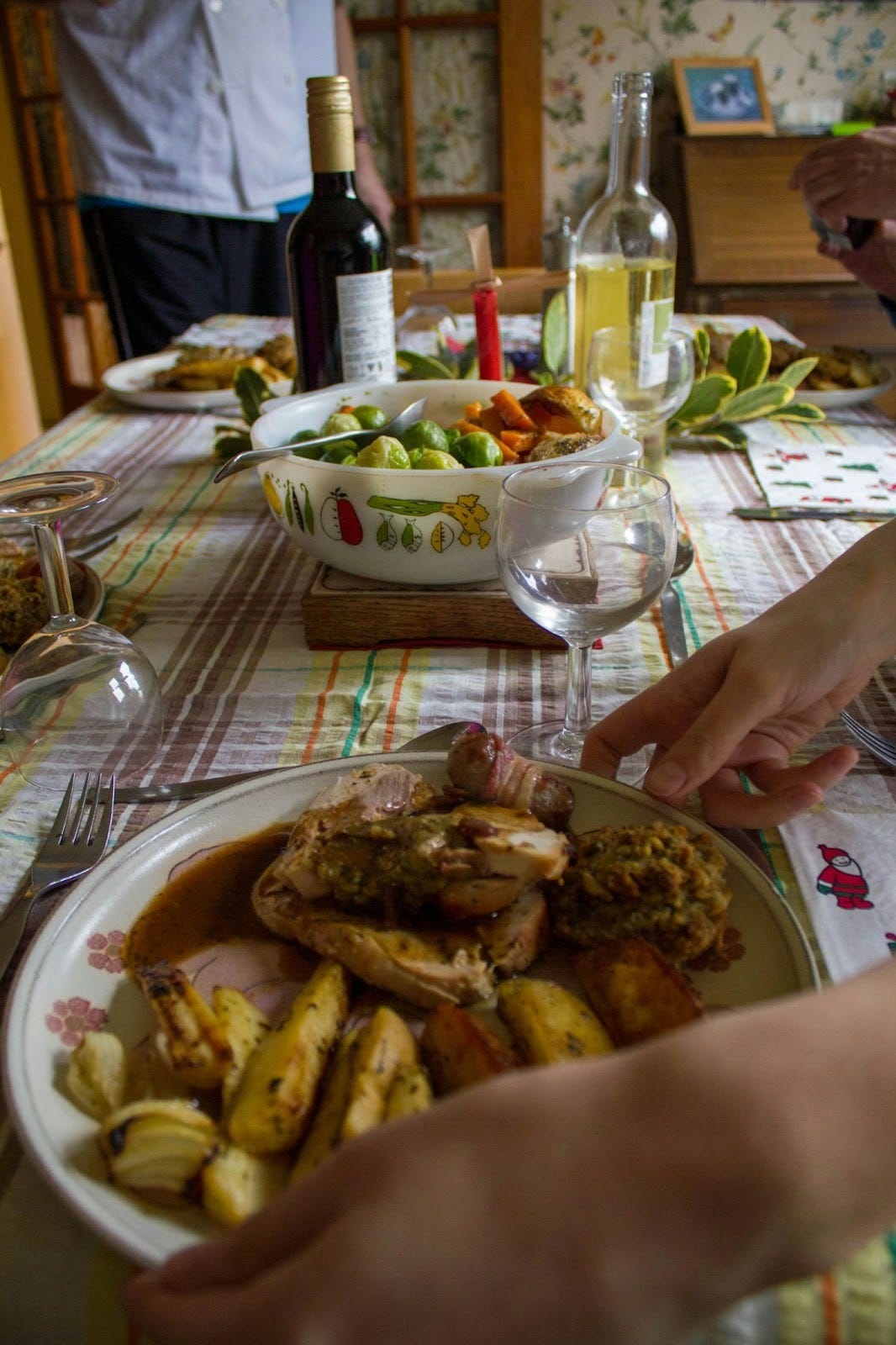
Intro — The Table as a Social Anchor
Subtitle: How the act of sharing food creates cohesion and trust.
“If you really want to make a friend, go to someone’s house and eat with him.” — Chavez
We often mistake the foundation of society for laws, borders, or economies. These are merely the scaffolding. The true foundation of any enduring community is the shared table. When we enter House III (Social), we are looking at the architecture of relationships, and there is no stronger brick in that wall than the act of breaking bread together.
Biologically, eating is a vulnerable act. In the wild, when an animal lowers its head to feed, it exposes its neck. It blinds itself to the horizon. Therefore, to eat in the presence of another is a primal signal of profound trust. It says, “I know you will not attack me while I sustain myself.” When we invite someone to our table, we are deactivating their fight-or-flight response and activating the parasympathetic nervous system. We are creating a zone of safety.
In the Epicurean philosophy, “Sufficient Food and Water” is Tenet I. In House I (Health), this sufficiency fuels the body. But in House III, sufficiency fuels the bond. A shared meal transforms a group of strangers into a tribe. It turns hunger, a source of agitation and pain, into gratitude and satisfaction. You cannot build a shield wall of genuine friends if the soldiers are starving or eating alone in the dark. The table is the anchor. It is the place where the drifting ships of our separate lives tie up and find stability in the harbor of one another.
Insight — Communal Nourishment and Reciprocity
Subtitle: Meals as microcosms of generosity and restraint.
“He who does not gather with me scatters.” — Ancient Proverb
The table is a training ground for character. It is where we learn the essential social physics of reciprocity. When a platter is passed, a thousand micro-decisions happen. Do you take the best piece? Do you leave enough for the last person? Do you serve your neighbor before yourself? These seem like matters of etiquette, but they are actually matters of morality.
We are living in an epidemic of isolation, fueled by the “TV dinner” mentality; even if the TV is now a smartphone. When we eat alone, we lose the feedback loop of the group. We consume without checking our greed. We rush without checking our pace. But at a communal table, we are forced to regulate. We must match the rhythm of the group. This regulation breeds Ataraxia (tranquility) because it creates a predictable, fair environment.
True sufficiency in a social context means ensuring that everyone is seen and fed. It is the practice of “Effective Communication” without words. Passing the water pitcher is a statement that says, “I notice your need, and I have the power to meet it.” This builds a reserve of social capital. When you feed the tribe, the tribe remembers. The bonds formed over simple sustenance are stronger than those formed over contracts or transactions because they touch the root of our survival instinct.
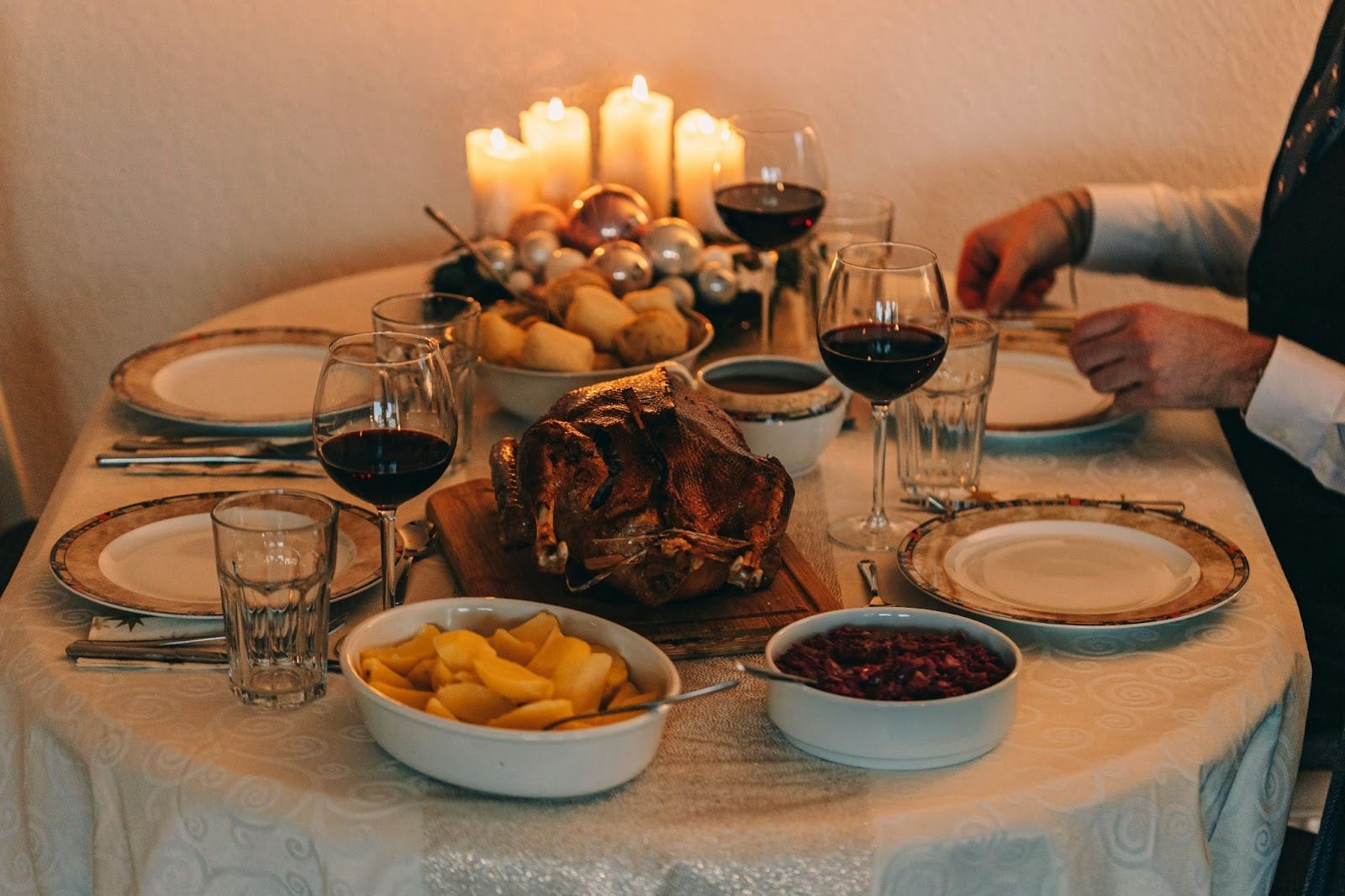
Practice — Hosting with Intention
Subtitle: How to create meals that foster belonging.
“Hospitality consists in a little fire, a little food, and an immense quiet.” — Emerson
How do we construct this anchor in a modern world that prizes convenience over connection? We must host with intention. This does not mean entertaining; it means stewardship. Entertaining is about impressing people; hospitality is about sheltering them.
First, look at the geometry of your furniture. Use a round table whenever possible. Rectangles create heads of the table; they create hierarchy and distance. A circle is egalitarian. Everyone is equidistant from the center; everyone can see everyone else’s eyes. King Arthur understood this; so should you. If you don’t have a round table, arrange the seating to break up couples and cliques.
Second, begin with a demarcation. Do not just slide into eating. Pause. Offer a short toast or an expression of gratitude; secular and sincere. “I am grateful for this food and for the company of the men and women at this table.“ This marks the transition from the chaos of the world to the order of the meal.
Third, cook dishes that require participation. Avoid the pre-plated restaurant style. Serve family-style. Bake a loaf of bread that must be torn by hand. Toss a salad that must be served with tongs passed from person to person. The physical handing off of vessels connects the diners. It weaves a web of interaction across the table. You are forcing the guests to acknowledge one another’s existence.
Application — The Weekly Shared Meal
Subtitle: Simple structure for deepening community bonds.
“Small cheer and great welcome makes a merry feast.” — Shakespeare
To build a “Shield Wall of Comm.Unity™,” you need consistency. An annual holiday party builds nothing but a hangover. You need a rhythm. This is the application: The Weekly Shared Meal.
Establish a night. Tuesday nights, for example. Invite neighbors, friends, or potential allies. The rule is simplicity. If you make it a gourmet performance, you will burn out, and your guests will feel indebted. Keep the barrier to entry low. Soup, bread, fruit, water. That is sufficient.
Rotate the duty if you must, but maintain the ritual. Over time, this rhythm reinforces community stability. Your friends know that no matter how chaotic the market is, no matter how crazy the news cycle is, on Tuesday night, there will be soup, and there will be a seat. This reliability is the antidote to the anxiety of the modern age.
This creates a space where “Effective Communication” can happen. You cannot have deep conversations in a text thread. You need the time it takes to eat a meal. You need the lulls in conversation that happen while chewing. In those lulls, the real truth comes out. The armor comes off. This is how you forge the shield wall; not on the battlefield, but in the mess hall.
Reflection — Sufficiency Beyond the Self
Subtitle: Measuring richness in the company you keep.
“Better a small serving of vegetables with love than a fattened calf with hatred.” — Solomon
Epicurus famously said, “We should look for someone to eat and drink with before looking for something to eat and drink.” He understood the math of happiness. A steak eaten in solitary confinement is just protein. Bread and cheese eaten with a brother in arms is a feast.
When we reflect on Tenet I in House III, we realize that “Sufficient” extends beyond our own biology. We are not rich until our community is fed. We are not secure until our neighbors are secure. The hoarder dies alone on a pile of gold. The Epicurean lives surrounded by the wealth of friendship.
Measure your richness this week not by what is in your pantry, but by how many chairs you need around your table. If the number is one, you have work to do. If the number is growing, you are building a fortress that time cannot erode. The food is temporary; it is consumed and gone in an hour. The connection endures. It becomes the structure of your life.
Call To Action
The war for your mind is fought on the battlefield of your home. Do not let the enemy of chaos occupy your territory. Reclaim your space, and you reclaim your peace.
For those ready to stop grazing and start mastering the vessel through the discipline of Fasting, look here: https://thteb7lessons.com
For those ready to stop the cycle of stress and finally end the burnout that comes from a life out of order, look here: https://endburnoutfast.com/
And to ensure you never miss a blueprint for the good life, subscribe to the SubStack.

Authentically,
Montgomery Crowe